 Across the United States, thousands of people work every minute of every day to keep the power flowing 24/7/365. From the coal miner to the lineworker and everyone in-between, it takes an immense amount of people, resources, coordination and planning to ensure you can charge your cellphone, heat your home, dry your grain or turn on your lights.
The cost of that electricity is determined by several factors, from the price of poles and wires to the expense of generating and delivering power.
In North Dakota, electric cooperative rate making is a function of local electric co-op boards of directors, which are democratically elected from the membership by the co-op members. Electric co-op boards weigh many factors when determining rates and balancing reliability, safety and affordability.
When an electric cooperative board of directors votes to increase rates, directors are also raising their own electric rates, because they, too, are members of the cooperative. This is one of the hallmark advantages of the cooperative model.
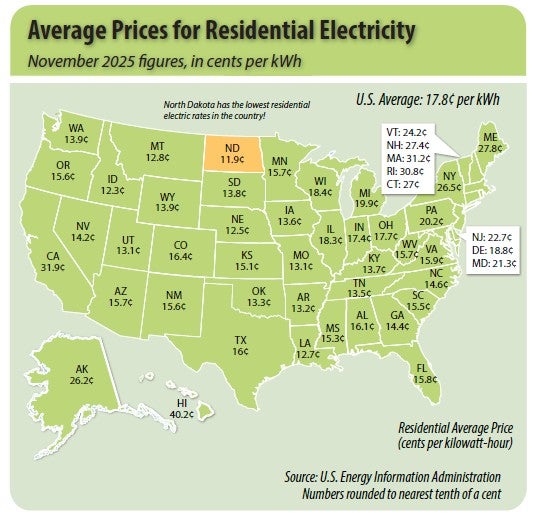
And, those democratically elected directors have done a good job, if you consider the price of retail electricity. North Dakotans enjoy the lowest electricity rates in the country, averaging 11.9 cents per kilowatt-hour!